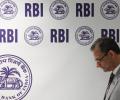
The Reserve Bank of India (RBI) has introduced stricter timelines for banks to process inward cross-border remittances, aiming to reduce delays in crediting funds to beneficiaries by mandating immediate customer intimation and more frequent nostro account reconciliation.

The Reserve Bank of India (RBI) is set to revise its directives for bank boards, aiming to alleviate operational burdens and enable them to concentrate on crucial policy and strategic decision-making, thereby enhancing corporate governance in the Indian banking sector.

TransUnion Cibil CEO Bhavesh Jain highlights the improved retail portfolio quality in January but stresses the need for lenders to continuously engage with borrowers on credit usage and repayment, similar to the approach taken during the Covid-19 pandemic, as the impact of the Iran war on credit quality is still being assessed.

The Reserve Bank of India (RBI) has granted approval for UAE-based Emirates NBD (ENBD) PJSC to acquire up to a 74 per cent stake in RBL Bank for $3 billion, marking the largest foreign investment ever in a domestic Indian bank.

Lenders are actively monitoring gold price volatility, prompting them to ask borrowers for additional gold collateral or partial principal repayment when loan-to-value (LTV) thresholds are breached, particularly for loans disbursed in February.

Despite Iran allowing 'non-hostile vessels' through the Strait of Hormuz, marine insurance premiums are expected to remain elevated due to persistent high-risk classifications and ongoing geopolitical tensions, with experts cautioning that the threat of attacks and collateral damage still exists.

'My resignation is a larger governance and governance-plus kind of an issue, which the board of directors of the bank should be introspecting.'
Loans against gold jewellery in India surged by an impressive 128 per cent year-on-year to nearly 4.28 trillion in February 2026, according to the latest Reserve Bank of India (RBI) data, significantly outpacing overall retail loan growth.

'When there is such an elaborate and a strong process, one would have expected anyone to either place the issues so that they can be addressed or go to the regulator and probably tell them rather than creating a kind of uncertainty for the stakeholders.

'During the bank's board meeting, many directors asked him if there is a governance issue but he said there is none.'

What is the reason behind this drying up of talent for the top post in private banks?

The controversy involves mis-selling Credit Suisse AT-I bonds to NRIs as fixed-maturity instruments, later written off after collapse.

Governance uncertainty and leadership visibility gap are likely to keep the stock under pressure in the near term, said Nomura in a report.

Remittances from West Asia in March rose sharply amid the conflict in the region, with industry insiders estimating inflows to be 20-30 per cent higher than what is usual in a month.

New business premium of life insurance companies grew 18 per cent year-on-year (Y-o-Y) to Rs 35,417 crore in February, driven by robust growth at the state-owned Life Insurance Corporation of India (LIC) due to a favourable base.

Only bona fide victims would be compensated by banks within five days of receiving the complaint.

'LIC will reduce but not fully exit its stake in IDBI Bank, which remains an important bancassurance partner,' says LIC of India' MD and CEO R Doraiswamy.

'...even though the investigation in the matter is ongoing, we have paid 100 per cent of the principal and interest to relevant departments of the Haryana government.'

The quantum of fraud detected by the bank is more than the 503 crore net profit it reported for the October-December quarter of 2025-2026.

Investors are moving away from the commercial paper (CP) market towards certificates of deposit (CDs), as primary CD issuances and rates on these short-term instruments rise.
 © 2026 Rediff.com - Advertise with us - Disclaimer - Privacy Policy - Sitemap - Feedback - About us - Terms of use - Grievances